By NC Coastal Team
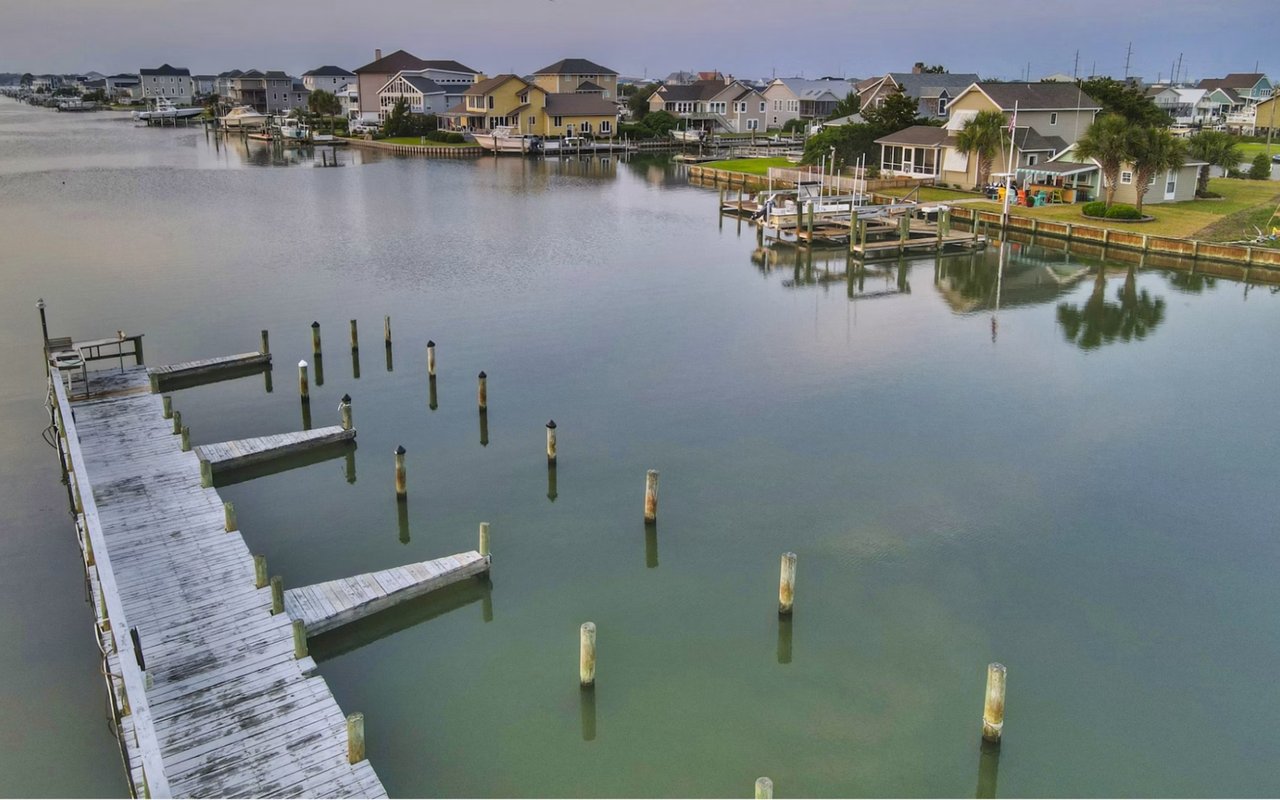
Water access is one of the most significant value drivers on the Crystal Coast — and one of the most frequently misunderstood during a transaction. Whether you're buying a canal-front home in Morehead City, a sound-side property on Bogue Banks, or a lot with riparian rights you intend to develop, understanding how dock rights work in North Carolina protects your investment before you commit to it.
Key Takeaways
- Riparian rights give waterfront owners certain access privileges, but building a dock requires permits — owning the land doesn't automatically authorize construction over the water
- CAMA general permits, issued through the NC Division of Coastal Management, are required for docks, piers, bulkheads, and other coastal development within Areas of Environmental Concern
- Dock dimensions, setbacks, and shaded impact limits are regulated under specific CAMA rules — structures exceeding allowable parameters require a major permit with a longer review timeline
- Existing docks should be verified for permit compliance during due diligence — unpermitted structures create legal and financing complications that surface at the worst possible time
Understanding Riparian Rights
Riparian rights give waterfront property owners in North Carolina the ability to access adjacent water and build within defined parameters — but those rights come with conditions buyers sometimes misunderstand.
What Riparian Rights Do and Don't Guarantee
- Riparian rights attach to the land — buying a waterfront property conveys those rights, but they can't be sold separately or transferred to a non-adjacent parcel
- Setback requirements mandate that structures stay within the property's riparian corridor, typically defined by lines drawn perpendicular to the shoreline at the property's side boundaries
- Shared riparian rights — common in communities where multiple owners share a waterfront access point — require careful review of recorded easements before purchase
- Properties marketed with "deeded water access" rather than direct waterfront ownership carry more limited rights and warrant specific legal review to confirm what access actually entails
Buyers who assume a waterfront location automatically translates into dock-building freedom regularly discover limitations that a title and permit review would have surfaced before closing.
The CAMA Permit Process
The Coastal Area Management Act governs development within North Carolina's coastal Areas of Environmental Concern, protecting public trust rights and the NC coastal environment. For most residential dock projects on the Crystal Coast, a CAMA general permit is the appropriate pathway — but structure size and scope determine which permit type applies.
What Buyers and Sellers Should Know About CAMA Dock Permits
- Piers and docking facilities may extend a maximum of 400 feet waterward from the normal high water line and shall not extend beyond the established pier length along the same shoreline for similar use
- Piers shall be no wider than six feet, and total shaded impact for docks and mooring facilities is limited to eight square feet per linear foot of shoreline with a maximum of 800 square feet
- Projects exceeding these parameters require a CAMA major permit — a more involved process with a significantly longer review and approval timeline
- General permits are issued through the DCM district office, where a field representative evaluates the proposal and guides applicants through the process
Sellers with existing permitted docks should have that documentation ready — it supports value and accelerates buyer due diligence.
Dock Due Diligence for Buyers
An existing dock doesn't automatically mean a permitted dock. Buyers who skip this verification step regularly encounter complications during inspections, title review, or lender appraisals.
What to Verify Before Closing on a Property With Water Access
- Request CAMA permit documentation for any existing dock, pier, or bulkhead and confirm it matches the structure currently on the property
- Review the survey to confirm riparian corridor boundaries and that existing structures fall within permitted setbacks
- Confirm water depth at the dock location — draft requirements may not be met at low tide for buyers intending to keep vessels
- Review all recorded easements and HOA restrictions on individual dock construction or vessel storage if the property involves shared water access
Buyers who complete this verification before removing contingencies close with confidence — those who don't occasionally discover the dock was never legally permitted to exist.
FAQs: Dock Rights on the Crystal Coast, NC
Can I build a dock on any waterfront property on the Crystal Coast?
Generally, yes, if the property has riparian rights and the structure meets CAMA dimensional requirements. Very shallow water, wetland buffers, or shared riparian corridors may add constraints — confirming feasibility before purchase is always advisable.
How long does a CAMA permit take for a residential dock?
A general permit for a routine residential dock typically issues within a few weeks of a complete application. Major permits involve a longer review process and coordination with multiple agencies.
What happens if a dock was built without a permit?
Unpermitted structures can trigger required removal at the owner's expense and complicate financing, title insurance, and resale — which is why permit verification is a non-negotiable step on any Crystal Coast waterfront purchase.
Navigate Crystal Coast Water Access with NC Coastal Team
Dock rights, CAMA permits, and riparian access are exactly the details that determine whether a Crystal Coast purchase goes smoothly or surfaces complications after closing. We are Tara Powell and Danielle Abraham — the award-winning RE/MAX NC Coastal Team. As co-owners and deeply aligned partners, we bring the local knowledge and genuine personal attention that complex coastal transactions demand.
Connect with the NC Coastal Team today.
Connect with the NC Coastal Team today.
