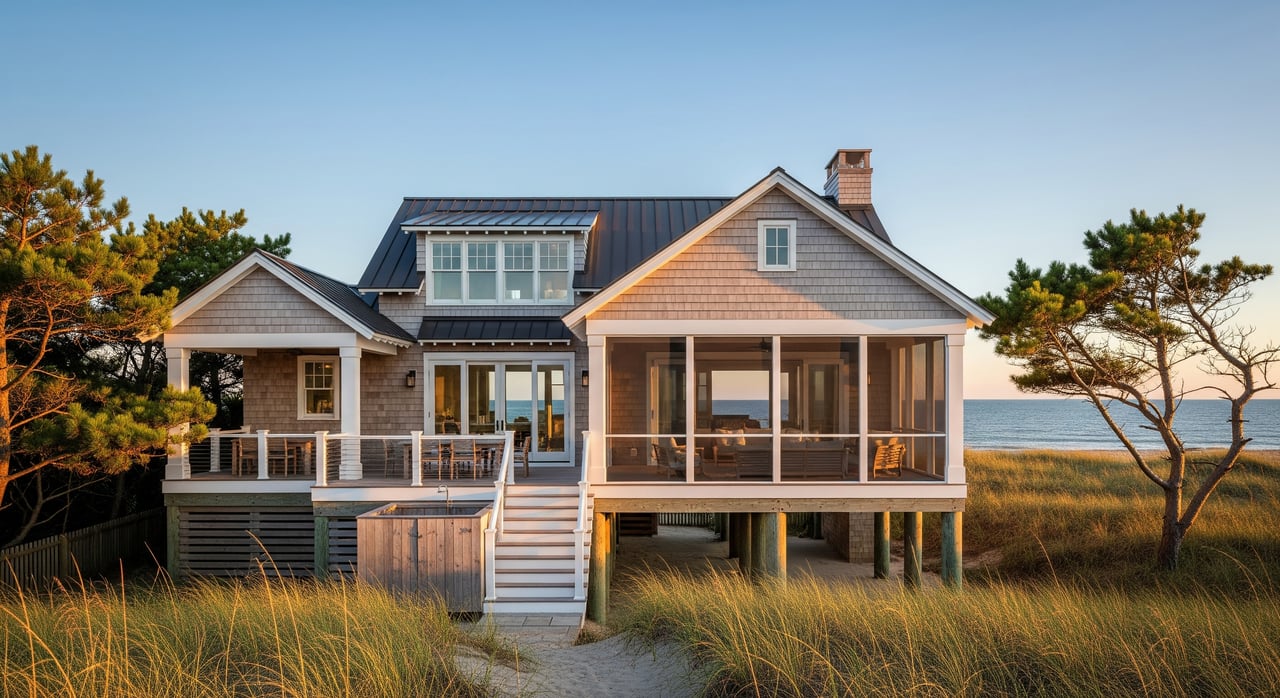
Thinking about buying or selling in Pine Knoll Shores? Life on Bogue Banks gives you sun, salt air and easy beach days, but it also brings wind, humidity and storm season. If you focus on the right coastal-ready features, you can enjoy the lifestyle with less upkeep and stronger long-term value. In this guide, you’ll learn which upgrades buyers love most, how to compare listings, and practical steps to plan improvements that stand up to island living. Let’s dive in.
Why coastal-ready features matter
Pine Knoll Shores sits on Bogue Banks, a barrier island exposed to salt spray, high humidity, onshore winds and seasonal hurricanes. Local agencies emphasize coastal resilience because barrier islands face higher storm-surge and erosion risks than inland areas. To understand this backdrop, explore the North Carolina Division of Coastal Management and track storm history with the NOAA National Hurricane Center.
Many homes fall within FEMA flood zones, and Base Flood Elevation can influence both design and insurance. Before you buy or renovate, check your property’s flood zone on the FEMA Map Service Center. North Carolina follows model building codes for high-wind regions, so product approvals and proper installation matter. You can review code resources through the International Code Council.
Insurers are paying close attention to coastal risk, so upgrades that reduce exposure can help with insurability and peace of mind. For current consumer guidance on coverage and underwriting in North Carolina, visit the North Carolina Department of Insurance.
Five features buyers love in Pine Knoll Shores
1) Composite decking
Composite decking blends wood fibers and plastic polymers to create boards that resist rot and insects. In a salty, humid climate, it stands up better than untreated wood and needs far less frequent sealing.
- Why buyers love it
- Low maintenance with simple periodic washing.
- Good resistance to moisture and decay near the ocean.
- Comfortable underfoot and less prone to splintering.
- What to watch
- Higher upfront cost than pressure-treated wood.
- Some products can fade in the sun; lighter colors stay cooler.
- Follow manufacturer spacing and ventilation to maintain warranties.
- Resale and permitting
- Composite is a common selling point in coastal listings and signals low upkeep.
- Elevated decks may require permits and corrosion-resistant fasteners; confirm local wind and flood standards through Carteret County Planning & Inspections.
Tip: Exterior projects often show strong buyer appeal. For national ROI trends on deck replacements, see the Remodeling Cost vs. Value report.
2) Impact-rated windows and doors (and shutters)
Impact-rated glazing protects openings from windborne debris and pressure changes during storms. On a barrier island, durable openings help reduce interior water damage and post-storm repairs.
- Why buyers love it
- Better storm protection and fewer cleanup headaches.
- Quieter interiors and improved energy performance compared with older windows.
- Some insurers may prefer or incentivize protected openings.
- What to watch
- Higher initial cost than standard windows.
- Performance depends on proper flashing, attachment and sealing.
- Keep documentation for product certifications and installation.
- Resale and compliance
- Buyers expect hurricane-ready protection in coastal markets.
- Keep certificates for impact standards (such as ASTM testing) and installation records for permitting and insurance discussions.
Tip: FEMA provides coastal construction guidance on protecting openings. You can find resources at FEMA.gov.
3) Metal roofs
Metal roofing, typically aluminum or properly coated steel in marine settings, is known for wind resistance and long service life. When installed to code, it performs well in high-wind zones and needs less routine maintenance than many alternatives.
- Why buyers love it
- Long lifespan and strong wind uplift performance.
- Reflective coatings can help with heat reduction.
- Fire resistance and clean, coastal look.
- What to watch
- Higher upfront cost than asphalt shingles.
- Choose materials designed for salt-air environments to avoid corrosion.
- Regularly inspect fasteners, seams and coatings.
- Resale and compliance
- Often viewed as a premium, low-maintenance upgrade in beach markets.
- Installation must follow manufacturer specs and local wind requirements.
For coastal material selection tips, review the Metal Roofing Alliance’s resources.
4) Outdoor showers
An outdoor shower or rinse station near a beach entry keeps sand and salt outside where they belong. It is a small feature that delivers big lifestyle benefits for beach days.
- Why buyers love it
- Convenient cleanup before heading inside.
- Helps protect interior finishes and reduce housekeeping.
- Simple upgrade with strong showing appeal.
- What to watch
- Use corrosion-resistant fixtures and fasteners.
- Plan for drainage and privacy; confirm if permits are needed for plumbing tie-ins.
- Keep drains clear and inspect hardware periodically.
- Resale and compliance
- A cost-effective addition that reads as “beach-ready” in listings.
- Check permit needs with Carteret County for any permanent plumbing or structural changes.
If you’re planning work that requires permits, start with Carteret County Planning & Inspections.
5) Elevator-ready designs (or an elevator)
Multi-level coastal homes are common, and elevator-ready planning increases accessibility for aging in place, multigenerational living and vacation rental use. “Ready” typically means stacked closets or a framed shaft, adequate load-bearing design and electrical capacity.
- Why buyers love it
- Easier access to elevated living levels.
- Future-proofs the home and can widen the buyer pool.
- Enhances rental appeal for some visitors.
- What to watch
- Full installations are a significant investment.
- Equipment and electrical systems must account for flood zones.
- Elevators need regular professional maintenance.
- Resale and compliance
- Disclosing elevator-ready features is a plus for many buyers.
- Coordinate early with the building department for structural, mechanical and electrical requirements.
For general flood and mechanical placement guidance, review resources at FEMA.gov.
Local context to guide your choices
Barrier-island living means planning for wind and water. Before you prioritize upgrades or compare offers, use these trusted sources:
- Check your flood zone and Base Flood Elevation on the FEMA Map Service Center.
- Review coastal policies and resources at the North Carolina Division of Coastal Management.
- Track regional storm information through the NOAA National Hurricane Center.
- See North Carolina insurance consumer guidance via the North Carolina Department of Insurance.
- Explore national project ROI trends in the Remodeling Cost vs. Value report.
Quick checklists for sellers
Use these steps to position your Pine Knoll Shores home as durable and low-maintenance:
- Prioritize improvements that reduce risk and upkeep: protected openings, resilient roofing, composite or well-detailed decking and corrosion-resistant exterior hardware.
- Document everything: permits, product approvals, installation photos, warranties, contractor licenses and receipts.
- Choose marine-ready materials: stainless or hot-dipped galvanized fasteners, aluminum or properly coated steel roofing and UV-resistant finishes.
- Hire experienced coastal contractors and request references from barrier-island projects.
- Confirm local permit needs with Carteret County Planning & Inspections.
Quick checklists for buyers
Compare homes through a coastal lens to avoid surprises after closing:
- Request certification and installation documentation for any claimed impact-rated windows or doors.
- Inspect decks for proper flashing, corrosion-resistant fasteners and solid framing; ask about composite brand and install details.
- Verify roofing material, fastener pattern and age; ask about any wind-storm repairs.
- Confirm flood zone and ask for elevation certificates and flood insurance details; check the FEMA Map Service Center.
- Ask your insurer early about any requirements or discounts for impact protection or roofing; consult the North Carolina Department of Insurance.
How to compare listings in Pine Knoll Shores
When two homes look similar online, dig into the features that matter most on the coast:
- Openings: Are windows and doors impact-rated or protected by quality shutters? Is documentation available?
- Roof: What material is on the roof, and how was it fastened? Does it meet local wind standards?
- Decking and exterior details: Are boards composite or pressure-treated? Are fasteners corrosion-resistant? How is the deck attached to the house?
- Elevation and access: How high is the main living level, and how do you reach it? Is the home elevator-ready?
- Outdoor living: Is there a practical rinse station or outdoor shower near entries to keep sand outside?
- Paper trail: Are permits, warranties and service records organized and available for review?
These answers can help you weigh long-term maintenance, comfort and ease of insuring the property.
The bottom line
Homes that blend durability, low maintenance and coastal-smart design stand out in Pine Knoll Shores. Whether you are updating before selling or comparing options as a buyer, focus on protected openings, resilient roofing, smart decking, outdoor rinse solutions and future-ready access. With the right choices and documentation, you can enjoy turnkey coastal living and fewer insurance or permitting headaches.
Ready to plan your move or prep your sale? Reach out to the NC Coastal Team for local guidance, virtual tours, and a clear plan to prioritize upgrades that matter on Bogue Banks. Get Your Home Value and make your next step with confidence.
FAQs
Are impact-rated windows required for Pine Knoll Shores homes?
- Requirements vary by local code, wind zone and your insurer; impact protection is often recommended on the coast and may be required in certain exposures, so keep product certifications and installation records handy.
Do composite decks last longer than pressure-treated wood near the ocean?
- Composite decking resists rot and insect damage better in salty, humid conditions and needs less staining, but quality and correct installation with corrosion-resistant fasteners are essential.
Will a metal roof lower insurance costs on Bogue Banks?
- Some insurers offer discounts for durable, code-compliant roofing with high wind ratings, but savings depend on the insurer’s rules and documented materials and installation.
Is an outdoor shower worth it for resale in Pine Knoll Shores?
- Yes, it is a small investment with high lifestyle appeal for beach buyers and can help protect interiors by keeping sand and salt outside.
Should I make my coastal home elevator-ready or install one now?
- Elevator-ready planning is a relatively low-cost way to boost accessibility for future buyers; a full installation is more expensive and makes the most sense if you need it now or want to enhance rental appeal.
